
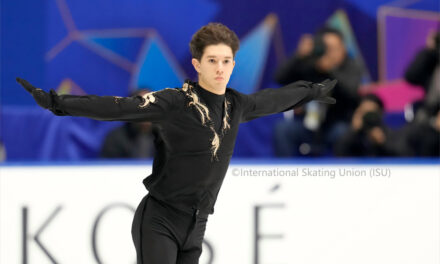
Adam Hagara’s Journey to His First Grand Prix in the Olympic Season: Focusing on Personal Bests Amid Media Spotlight
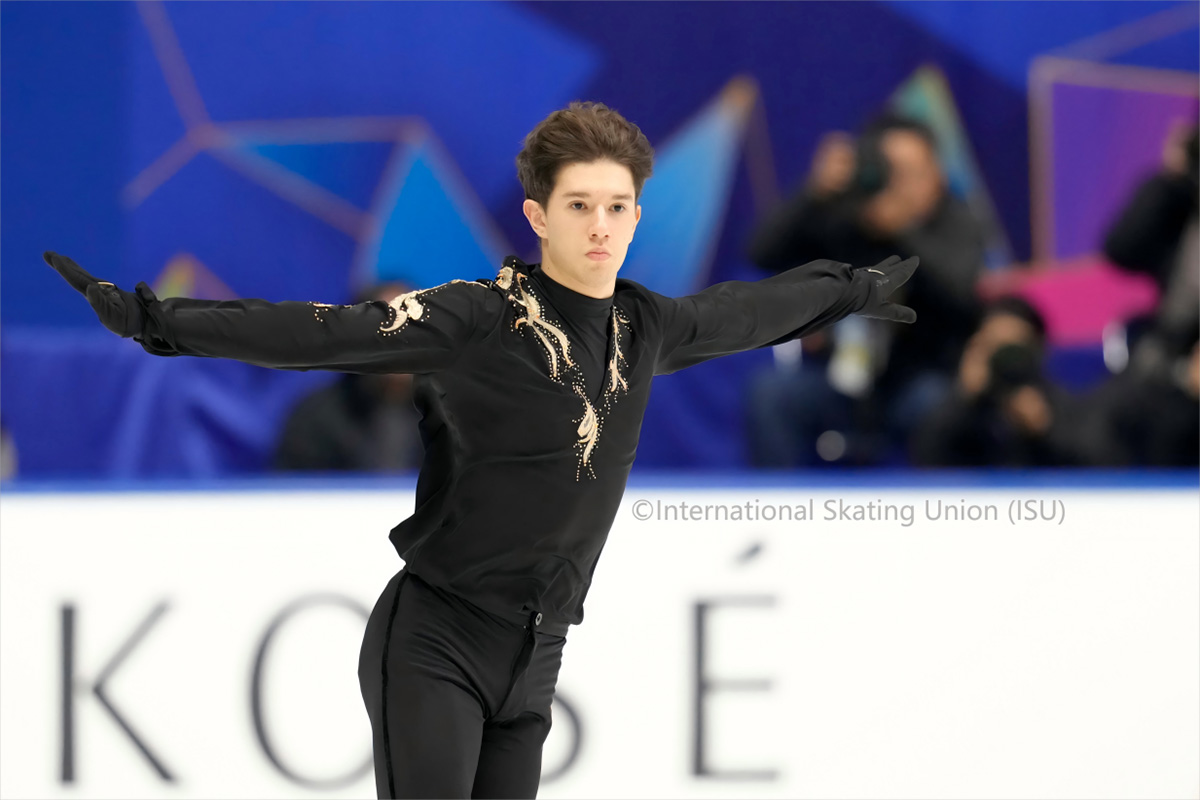
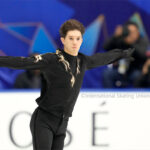
As Slovakia's most remarkable figure skater, Adam Hagara has been competing in both junior and senior events since he was just 15 years old. This season, he officially graduated from the juniors and took part in his very first Grand Prix, the NHK Trophy. His journey into the world of figure skating began by following in the footsteps of his older sister, Alexandra. Now, she has not only been his guiding star on the ice but also his coach, supporting him as he trains.
In this competition, despite the frustration of his mistake on the Triple Axel in the short program, he spoke with quiet pride: “For me, landing two quadruple jumps is a huge accomplishment — and for my country as well. Before me, only one skater from our country had done it: Jozef Sabovčík, who performed the first quadruple jump of his time, although it was not officially recognized afterward. So, it's a big accomplishment for me and for my country to be able to do it and follow after him”
Not long ago, Adam faced the challenge of an ankle injury that temporarily halted his training for the quad Salchow. He lives in Boleráz, but his training takes him to Trnava and Bratislava—his main training locations, about 50 kilometers from home. When his father heads to work in Bratislava, he drives Adam to training and school, and before returning home in the evening, Adam fits in one more training session.
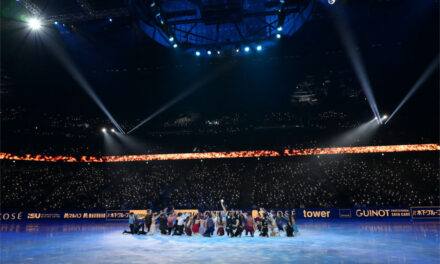
With his cheerful and optimistic personality, Adam embraces challenges with grace and determination, and truly enjoys the fun of skating. After the gala, we were fortunate to hear him share more about his thoughts on the sport, his life, and some fun behind-the-scenes stories from serving as Nepela’s stunt double in a film shoot.
How did you feel about the gala?
I enjoyed myself, even though I chose sad music. That's just me. Yeah, it was really nice.
This is your first time at the NHK Trophy. What impressions do you have of the atmosphere and the audience? Is this all new for you?
Not really new, because I experienced a lot of events with many fans, and I really like it. When there is a huge crowd, it always motivates me to do better, and they always make me feel like at home. Maybe it's just I feel better when there is a huge crowd.
How nervous were you before the competition?
I was pretty nervous since it's my first NHK Trophy and it’s the first Grand Prix in general. My group consisted of the world's top figure skaters, so competing against them made me very nervous, but I was also happy that I had made it to the warm-up with them.
After the short program, you placed ninth, but in the final result, you moved up to sixth. How do you evaluate your performance and this result?
At this competition, I'm happy about my performances. In the short program, I messed up the Triple Axel, but other than that, I think I did pretty well. And also, I think I might have just lost focus for a moment — it wasn’t even really about concentration. I just thought I had already completed the Axel jump, so I didn’t put enough strength into it. That was my biggest mistake. There is always somewhere to go in my skating, and I can always get better. So, the lesson I learned from this competition is that I still need to be better, and I still crave improvement. But I think so far I can be happy with what I've achieved this season.
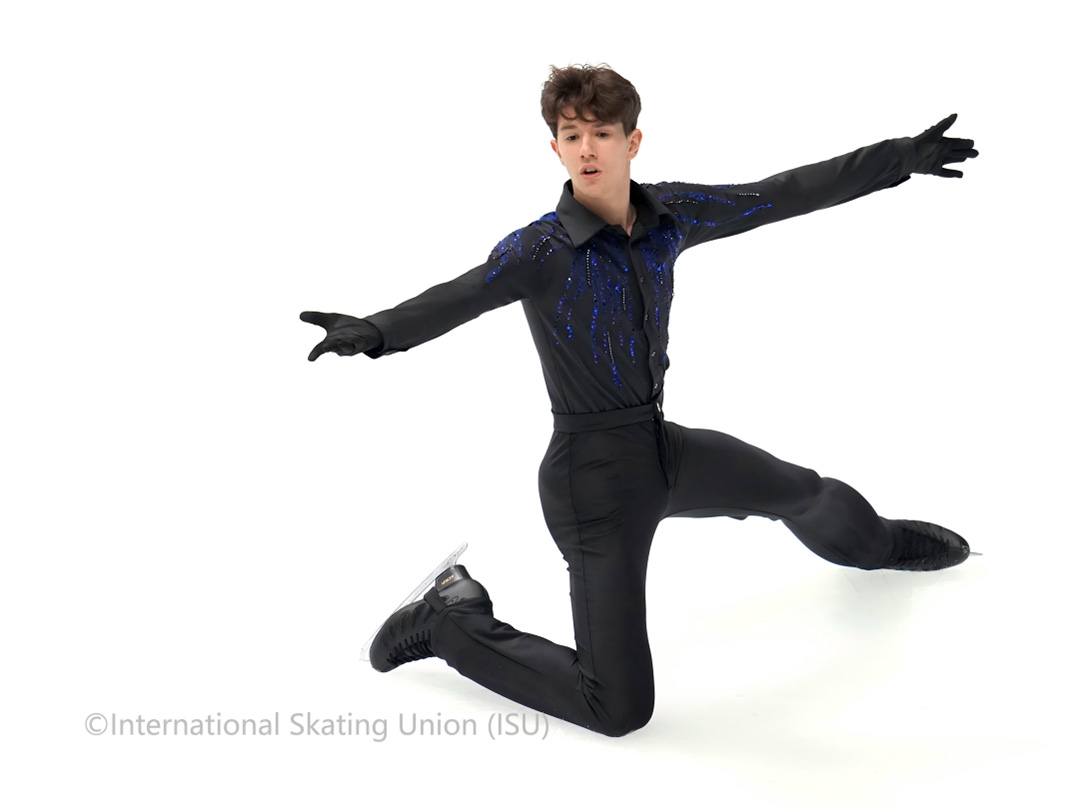
Did you set any goals for this competition before you came here?
Although my goal was simply to enjoy myself in the competition, soak up the atmosphere of my first Grand Prix event, and try to skate as clean as possible—because I went into the competition by concentrating on every single element, striving to do my best and see how it went—I was confident because I had already completed my performance and practice. I really tried to go for every single element.
You have a trademark move, Twizzel-entry Triple Axel, which is very impressive. Have you ever tried other kinds of entry for Triple Axel jump?
I think I can do any kind of entry into Triple Axel. I practiced many different entry methods during the summer. I was training many different entries, like the counter, which I was supposed to use this season. But we decided to make the Axel the third element in the short program, so I didn't do it. I was also planning to use the counter entry as well. But I can do it, I think it doesn't really matter for me from any kind of entrance. I've even tried a kneeling glide entry.
It's very amazing! We're looking forward to watching you showcase those in the future.
Let's talk about quadruple jumps. I know you had the ability to land them at the Boston World Championships, but ultimately you didn't include them in your program at that event. So, what made you decide to include quadruple jumps in both the short program and free skating this season?
Last year, I didn't have it stable yet, but before Boston, I felt good and wanted to go all out though we finally decided against it. But this season I really want to try and fit in with the best of the skaters. If I want to get to the highest places, I have to put in the quads and that's why we chose to do it this season. I think it's been working well so far, and we'll continue to improve and see how it goes throughout the season.
Do you watch videos of other skaters' jumps to get some techniques or ideas to improve your own?
Yes, I do. I usually look at Yuzuru's jumps, for example, because I think he has one of the best techniques in the world, and he always knew what he was doing. When I look for inspiration for my own jumps, I also compare them to mine—seeing how similar they are. I try to find the correct techniques in his jumps as well as in my jumps.
Have you ever watched Yuzuru Hanyu's ice show or competition live?
I have never seen him because I started competing in senior competitions when I was 15. My first big senior competition was the World Championships in France. He had already retired after the Beijing Olympics. It was about a month after that...But I would really like to see him sometime.
Performing cleanly in both programs with quadruple jumps significantly increases the difficulty. So, what is the biggest challenge for you in performing cleanly in both programs?
This year, as I added the quad toe loop, it became harder, because I also had to move around the Axel jump, for example, by moving to the later part. So that was the most difficult part. But So far, I am confident in my Axel jumps and quad toe loops; I feel pretty confident. We worked really hard on that. And also we still are working hard on the programs to get better, to get the spins better, to get the step sequence better. So it's a whole process, but I think you're gonna get there.
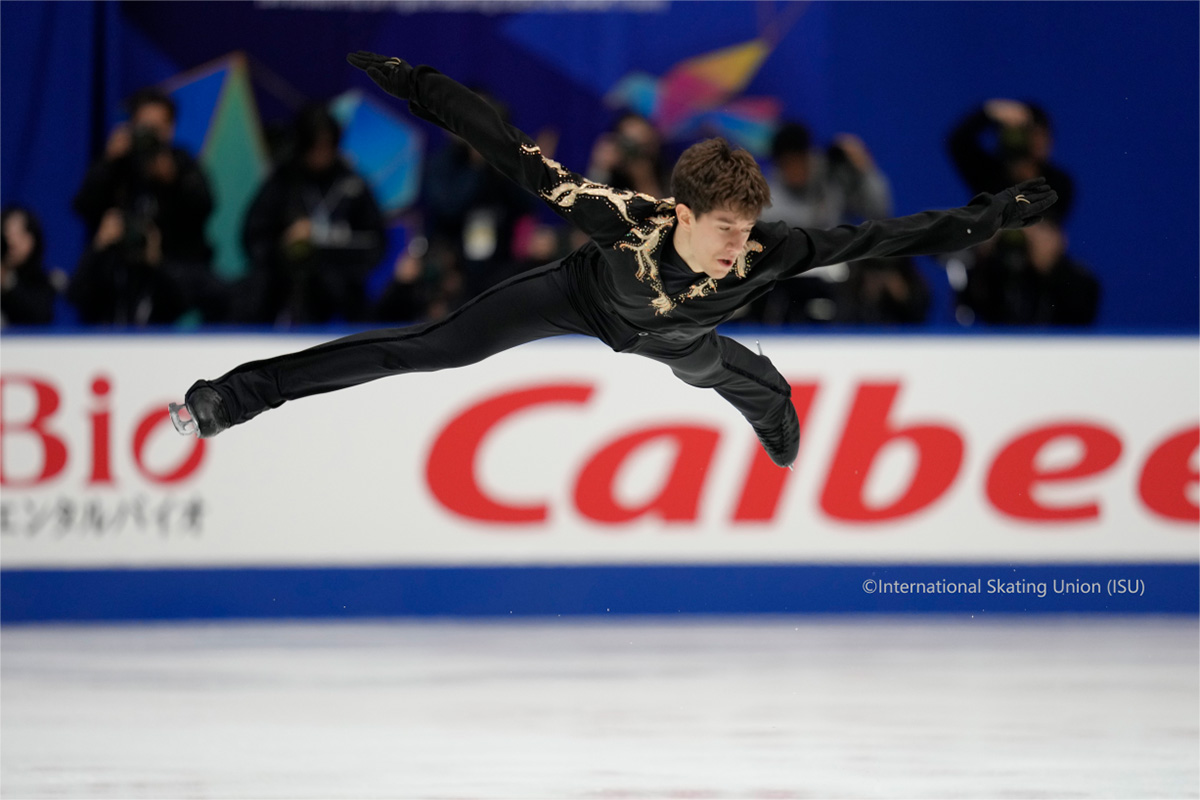
We know it's the Olympic season now, so every skater always wants to increase the difficulty of their programs. How do you balance increasing difficulty with maintaining stability and taking care of your health, while avoiding injury or overworking your body?
It's a really difficult question because sometimes I struggle with it as well. There are many times when I overtrain myself, but I think it's important to just enjoy the sport. When you feel some kind of pain that you're not used to, you should just take a break, go slowly—maybe focus on it in the next practice—and not rush it. Train gradually and periodically; you will get there, but don't push too fast. I think that's the most important thing to look out for.
Is your next competition the Warsaw Cup (Nov. 19 ,2025) , isn’t it?
Probably... I don't know yet, but for sure, the Four Nations*(Dec. 11 ,2025) , which is the National Championships for Slovakia. I don't know about the Warsaw Cup yet; we'll still decide based on how things go. I also had a back injury, so we're trying not to push too much and just take it slowly.
*The Four Nations Figure Skating Championships is an annual competition organized by the figure skating federations of the Czech Republic, Hungary, Poland, and Slovakia. It started in 2006 when the Czech and Slovak figure skating federations combined their national championships. Poland joined in 2008, and Hungary followed in 2013, forming the current Four Nations Figure Skating Championships. The results will show the medal standings for each country based on their performance. Therefore, it can be considered as an individual national competition for each participating country.
Compared to previous seasons, when you were juggling both senior and junior competitions, it must have been pretty busy. But this season, you're focusing on the seniors. With fewer events on your schedule, how has your training or mindset changed?
Nothing really changed. I just started a little bit later in my season, but everything stays the same, I changed my school — I'm now going to university so that's been a bit problematic. I'm trying to balance my schedule between university and training. So far I think I’m managing it. Actually, I think I have even more practice sessions than before, so it's been okay so far.
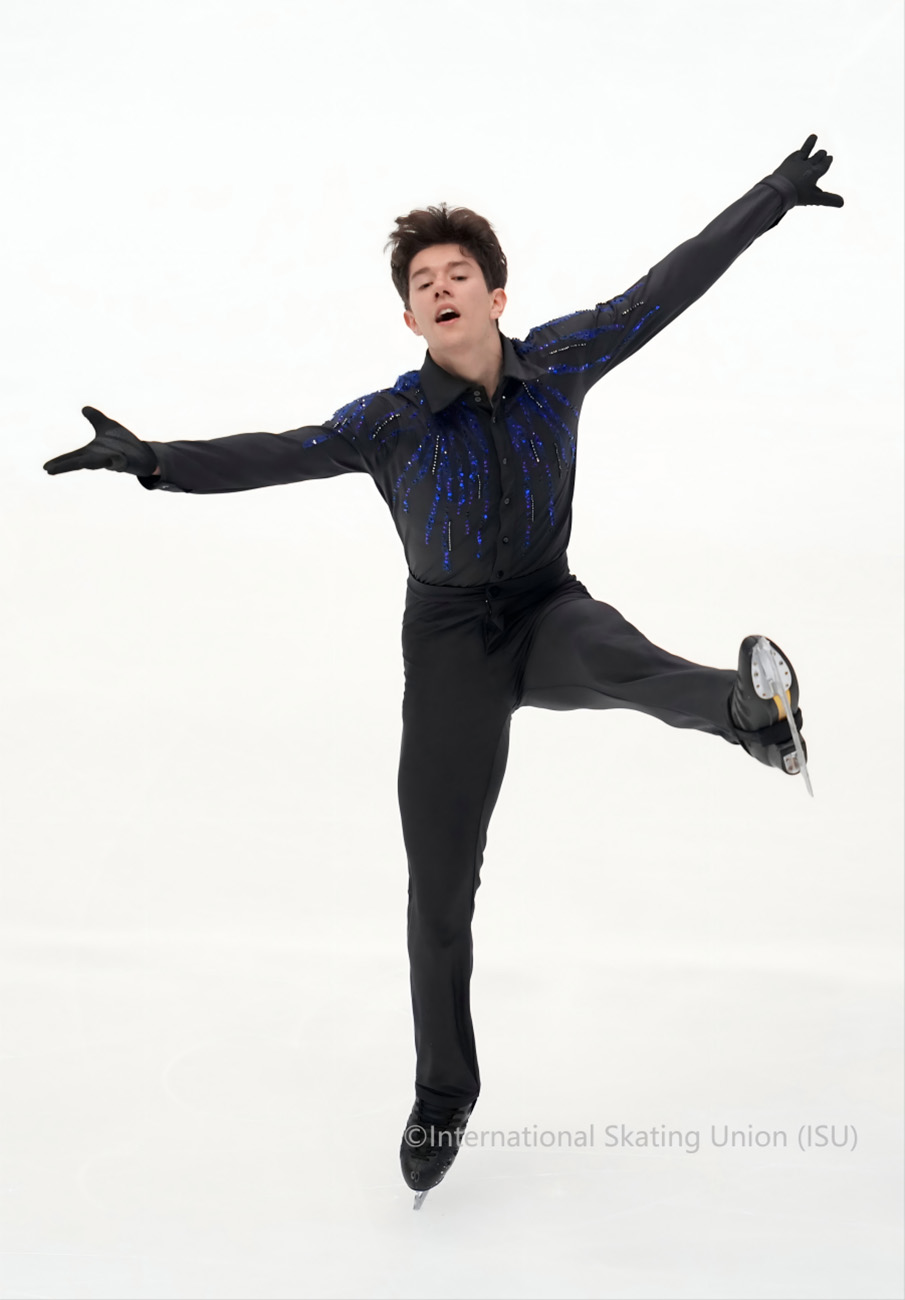
So you've started university. What are you majoring in?
Computer Science, see if I can make it through my first year. (laughs) Because school, for me, is not that much of a problem. It would be better, but it's hard to manage with the training schedule and schoolwork. There are a lot of assignments that I have to do every single weekend and I often have to work overtime every day, so it can be tough. But right now, for example, this week I didn't do anything for school, so I'm really excited to go back to it.
In your busy schedule, has your sister, as part of your coaching team, been a great help to you as well?
Because my sister is my second coach, she helps me with the mental aspect. She usually reminds me not to push myself too hard and to know when to stop. So she's like a clock for me, telling me when to stop so I don't push myself too hard. I usually try to do too many things and then it starts to affect my mindset.
Then, we’d like to talk about the music of two programs. One is from Bruno Mars (“When I Was Your Man” / “Runaway Baby”) and the other from James Bond (“James Bond 007 Theme” / “Rhapsody on Bond, James Bond”). Who chose the music for you for this Olympic season?
I chose the music. First, I discussed it with my sister, and then with my head coach, who had to be involved in the decision. It was basically the result of a group effort. I really like the music because I like Bruno Mars, so I wanted to use his songs for the performance. My sister and I searched for the music for about a month. Later, I said, “Let's use this one,” and she agreed. Then I went to my head coach, and he agreed as well. As for the free skate, we kept the same program from last year, so nothing really changed in the free skate.
You've worked with Jorik Hendrickx for a long period of time. How's your collaboration going?
I really like working with him; we usually go to his place to work on my programs. I think I spent about a week there this May. We would choreograph either the short program or the free skate. I usually use the same program for two years, so next year I will change my free skate. As for the short program, we'll see if I can adapt, because I feel like I'm not comfortable with it that much yet and hopefully that will change soon. He's a great choreographer because he observes me and identifies which movements suit me, which don't, and which make me look better. He tries to incorporate my personality into the program and I think that's the most important thing for a program.
I noticed that you changed the finishing post of the short program. (The original choreography ended with a pose lying on the ice.)
I didn't have much time left. That’s why I changed it, because I lost about 3 seconds when I fell on the Triple Axel. I could have maybe right on the ground and finished, but I chose to just stand still. (laughs) So it was kind of a last-minute improvisation to avoid deductions for a time violation.
Because you work with Jorik Hendrickx, I wonder if you have ever trained with Loena Hendrickx?
We were on the same practice place, She's great. She's one of the best skaters right now. I was with her on the same ice, about a year ago, and I just couldn't take my eyes off her because she was skating so well. I thought to myself, "This is how the best skaters skate and I want to be at that level one day."
Besides on-ice training. Do you have any other specialized training, like dance or ballet?
I do ballet. Mostly, we do strength training and sometimes power training, but we try to do everything on the ice because I don't have that much time for off-ice training. I usually get about 3 hours on the ice a day, and then I have school. So we try to fit everything into that time on the ice. We also focus on the conditioning my body, which we do by running through lots of programs. And so far, I think it’s been working well.
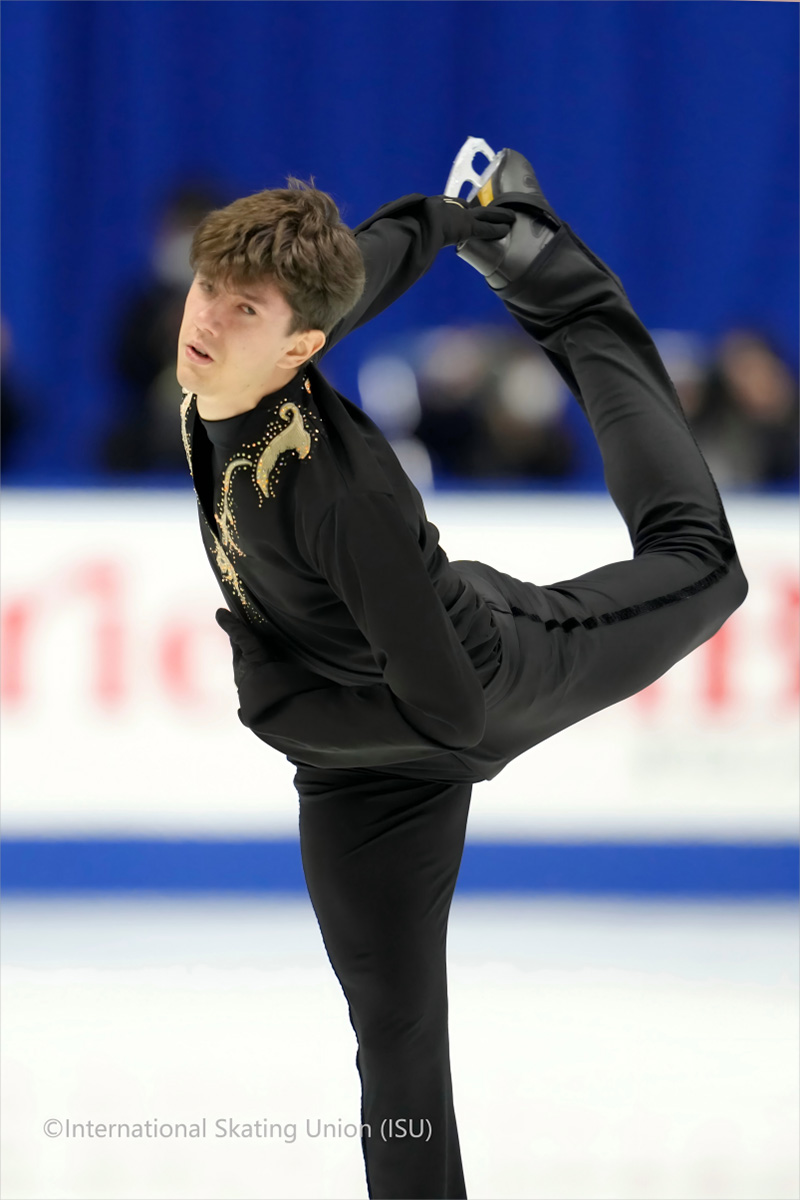
Then, finally, we’d like to talk about Nepela*. The movie was just released at the end of October. I haven’t had a chance to watch it yet, but I hope to see it one day. Was this your first time participating in a film? Does it have any special significance for you?
* "Nepela", a Czech-Slovak-Polish co-production, tells the little-known story of Olympic figure skater Ondrej Nepela. The film, opening on Oct. 30, explores his struggles with fame, identity, and political repression in the early 1970s.
Yes, it was my first time being in a film, and I was basically a stand-in for the main actor. The story is about the most popular figure skater in Slovakia. He won an Olympic gold medal during the Soviet era. For many young people, for example, they have forgotten a lot about figure skating in Slovakia. For me, it was really meaningful to help bring back the fame that the sport once had to the public. So it's really important for me to show people what figure skating is about and how much effort goes into it as well. It really means a lot to me to be part of it. I also think the film is great, and I hope it will be released in English as well — At least with subtitles, I hope.
Any interesting experience during filming?
The filming process was pretty hard, but the jumping parts weren't too difficult, as the jumps were mostly things like the triple Salchow or triple toe loop, double Axel. What really made it hard was having to stand there for 30 minutes every single time, I was there for 8 hours on the ice and just had to extend for 2 minutes. Sometimes I had to extend 30 minutes because they were adjusting the cameras and other equipment. After that, they’d shoot for maybe 30 seconds, and then I had to stand for another 30 minutes. But the film is not that much about skating—it’s more about the person, about his mental state and how tough life was for him in the world he lived in.
It's very important to promote figure skating in your country through this movie. Do you have any ideas on how to encourage more people to participate in figure skating in your nation?
The most important factor in promoting the sport is getting better and better. So I think that if I keep winning, more people will be drawn to figure skating. In our country, there are two main sports that are always popular: hockey and soccer. However, the most famous sports in Slovakia often start with one exceptional individual. For example, Petra Vlhová, who was a skier and she still is, and she won the Olympic gold medal. As a result, a lot of people started to really like the sport. We also have Peter Sagan, the famous cyclist. Sports tend to gain popularity when someone starts winning big. So, I will try to do the same and hopefully bring a lot of attention to figure skating. Although figure skating isn’t recognized that much in the media here, it’s quite popular in Slovakia, and people really like the sport.
You're about to participate in the Olympics, and in your country, the media will be extensively covering you, including television and other media outlets. Do you feel more pressure this season compared to before?
I feel pressure, but I usually try not to let it affect me. I just try my best, and I tend to put a lot of pressure on myself during practice. That’s the main problem. So usually it doesn't really matter to me what kind of pressure they put on me because I have much more pressure on myself than they could ever put on me. That’s why it's really important for me to always perform at my best every time.
We’ve seen you perform exceptionally well and impressively in this event. Thank you for the interview, and best of luck for the rest of your competitions this season.
(Written by Tien-yun Chang, photographer: ISU)

近期评论
——“花样滑冰是艺术与体育最好的结合”
——“花样滑冰是艺术与体育最好的结合”