

2025–26 Grand Prix of Figure Skating Final Review
Nagoya Sounds the Drumbeats of Dreams Bound for Milan 2026
2025–26 Grand Prix of Figure Skating Final Review—Nagoya Sounds the Drumbeats of Dreams Bound for Milan 2026
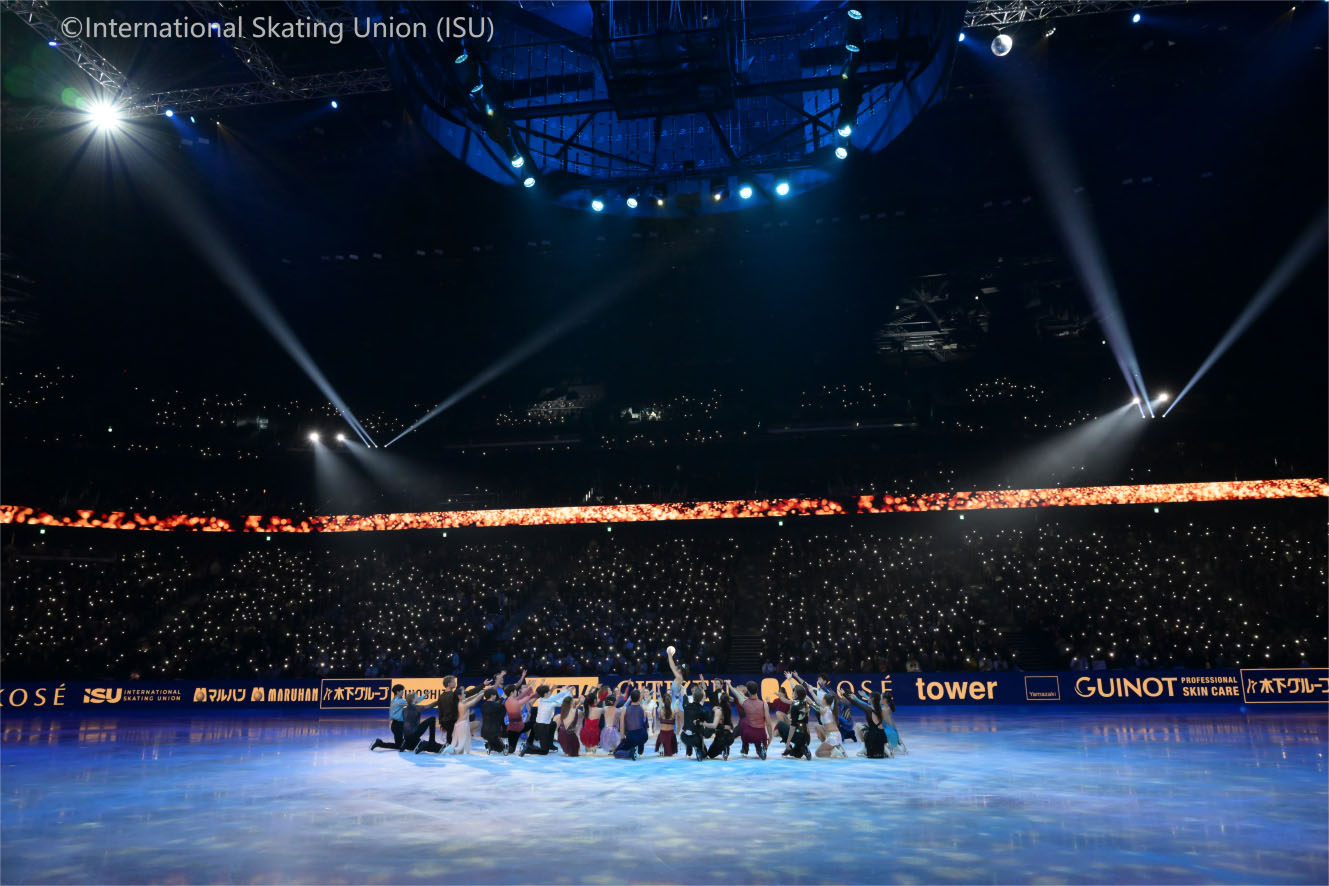
The 2025 ISU Grand Prix of Figure Skating Final (Senior and Junior) was held from December 4 to 7 at IG Arena in Nagoya, Japan, with great fanfare. Bringing together the season’s top six point-earners, the event served not only as the ultimate showdown of the Grand Prix series, but also as a crucial dress rehearsal for the 2026 Milano-Cortina Winter Olympics.
For senior skaters, it marked one of the final opportunities to measure themselves directly against the world’s elites. For juniors, it offered a rare stage for observation, challenge, and growth—laying the groundwork for future breakthroughs on the senior circuit.
Junior Division: High-Stakes Technical Breakthroughs
This year’s junior Grand Prix competitions teemed with highlights, particularly in the women’s and men’s singles events, as several young talents pushed the boundaries of technical execution. Mao Shimada achieved an impressive four-peat, becoming the first junior skater in history to accomplish such a feat. Meanwhile, Minkyu Seo became the first-ever Korean male skater to win a junior Grand Prix gold medal, demonstrating strong competitiveness.
With their fearless technical content and growing competitive maturity, these junior athletes laid down a formidable challenge to the established senior circuit.
Junior Women: The Triple Axel Era

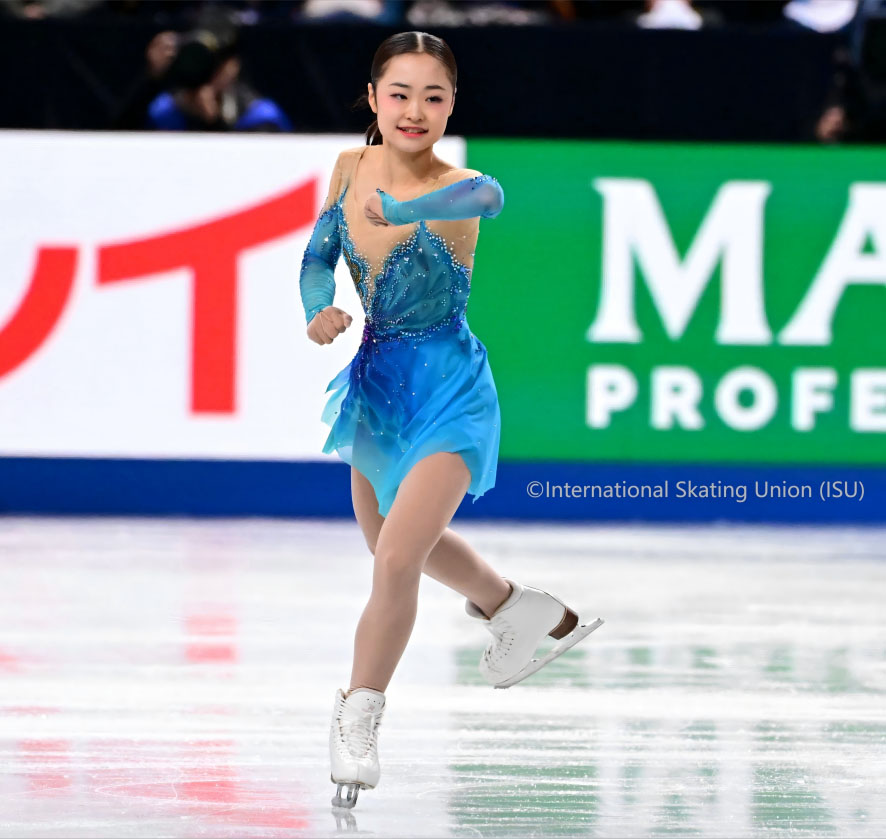
In the junior women’s event, 17-year-old Mao Shimada from Japan secured her fourth consecutive title with a total score of 218.13 points, making history as the first-ever junior skater to achieve this milestone. Despite a fall on her Quadruple Toe Loop jump (4T) in the free skate, Shimada courageously challenged herself by completing the Triple Axel jump (3A), demonstrating extraordinary stability and unparalleled technical skill. In a post-competition interview, Shimada said, “I don’t think it’s about not making mistakes, but about giving my best effort in every jump. It’s about performing with authenticity.” Her confidence in the future undoubtedly leaves one full of anticipation for this “Junior Queen” as she prepares for senior challenges.
Korea’s Yuseong Kim delivered one of the most stunning come-from-behind performances of the event. Rising from a fifth-place finish in the short program, she produced a flawless free skate, successfully landing a 3A and earning 134.6 points in the segment. With a personal-best total of 198.66, she claimed the silver medal. Kim stated: “Figure skating is an extremely challenging individual sport, and the psychological pressure during training is immense. But having the person (Yujae Kim) who understands me best by my side gives me the strength to keep fighting.” As the first pair of twins in history to qualify for the Junior Grand Prix Final, the Kim sisters embodied the power of mutual support and shared resilience.
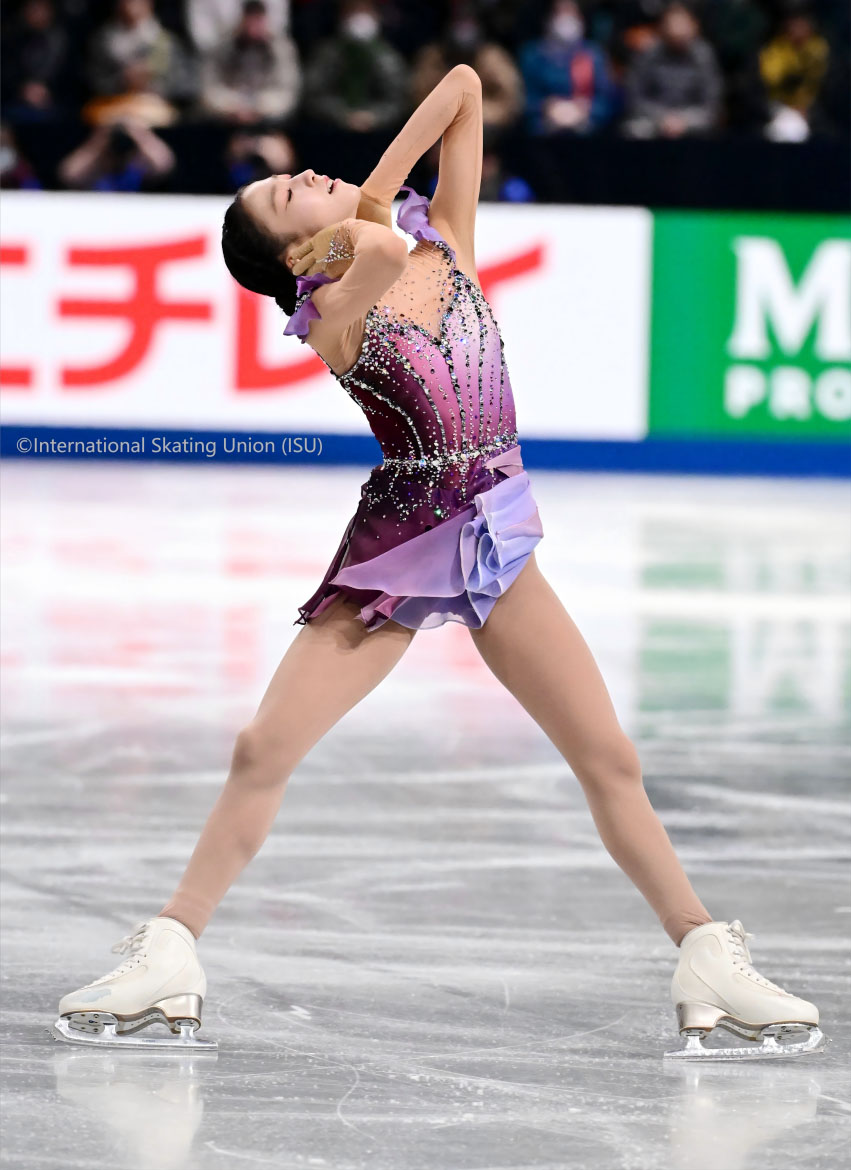
Notably, all six finalists in the junior women’s event attempted the Triple Axel in this competition. Once regarded as an almost unreachable pinnacle, the 3A has evolved into the defining standard for the new generation. Japan’s Mei Okada, while falling on the 3A, showcased remarkable composure to recover and deliver a strong free skate featuring six triple jumps. She secured the bronze medal with a personal-best total of 195.82 points. The fierce competitiveness of the field was underscored by the razor-thin margins, with a mere 0.6 points separating third and fifth place overall.

Junior Men: A Rising Star for Korea
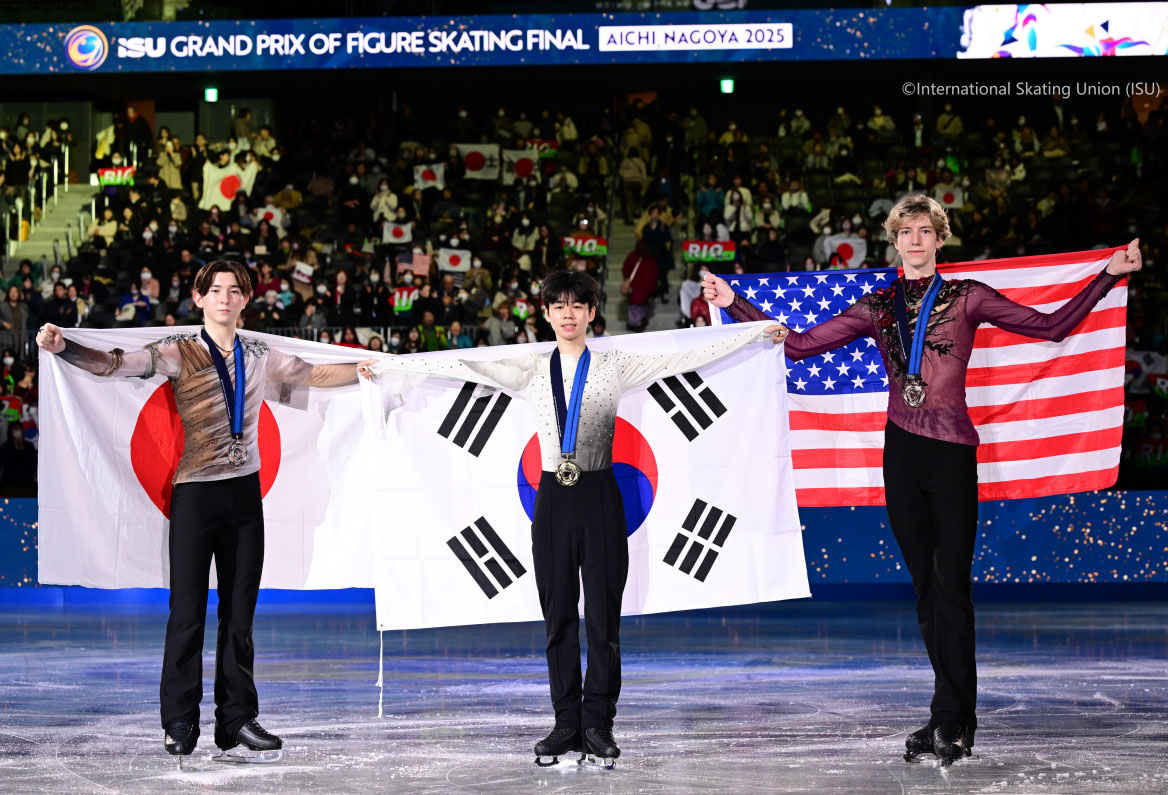
In the junior men’s competition, Korea’s rising star Minkyu Seo clinched victory with a personal-best total of 255.91. His triumph marks a significant milestone, as he becomes only the second Korean skater to win a Junior Grand Prix Final title, following in the footsteps of the legendary Yuna Kim in the 2005-06 season. Often hailed as the successor to Junhwan Cha, Seo captivated the audience with his fluid skating and refined artistic expression. In the free skate, he attempted only one Quadruple Salchow (4S). This strategic approach of focusing on execution allowed him to outscore Japan’s Rio Nakata, who pursued a far more aggressive layout featuring three quadruple jumps.
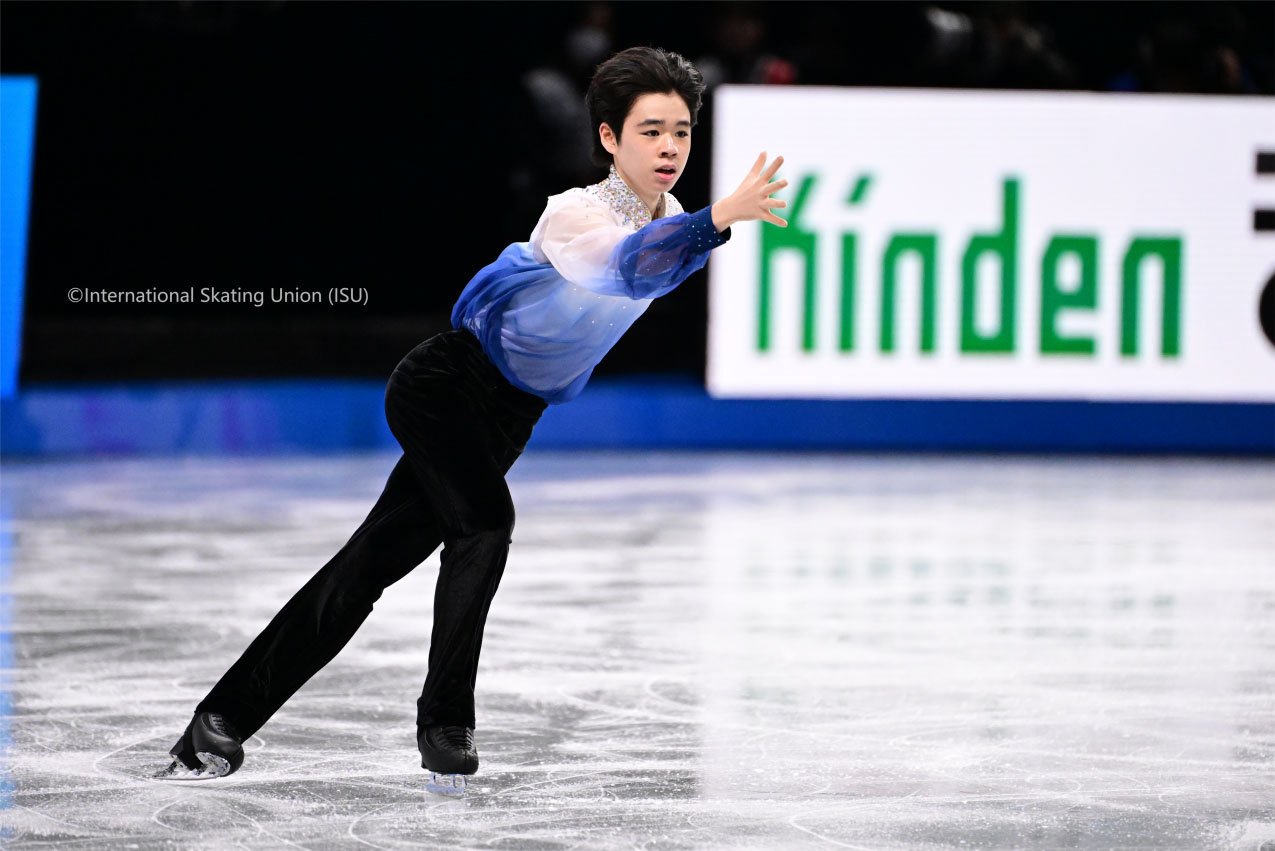
Japan’s Rio Nakata, the leader after the short program, attempted two Quadruple Toe Loops (4T) and one 4S in his free skate. However, the sheer ambition of the layout appeared to take a toll on his stamina. After several jump errors, he finally finished second overall with 249.70 points. Across his three Junior Grand Prix Final appearances, Nakata has indeed completed a full set of medals, earning gold, bronze, and silver.
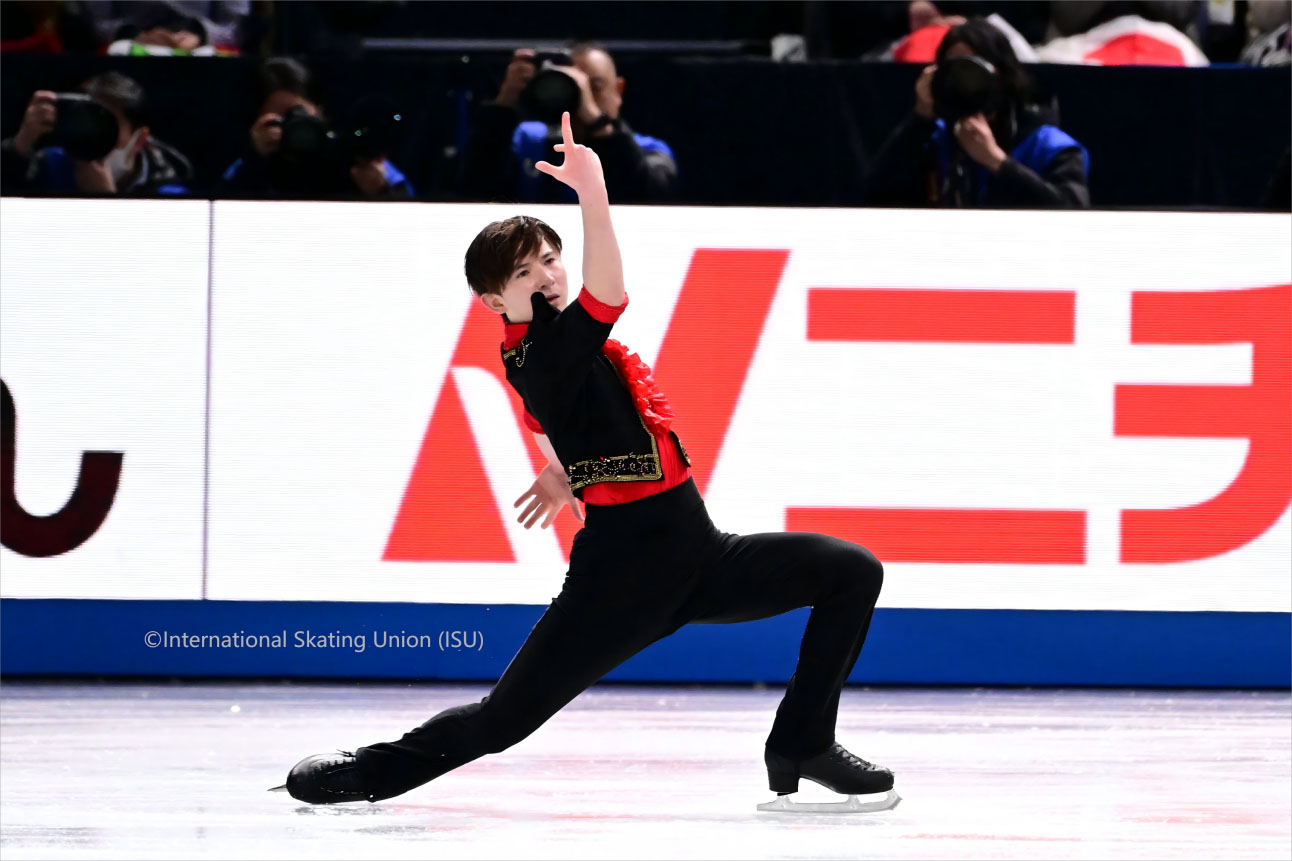
American skater Lucius Kazanecki also demonstrated impressive, steady growth under the guidance of Ilia Malinin’s coaching team. By correcting minor technical issues from his short program, Kazanecki successfully landed two 4Ts in the free skate to finish with a personal-best of 225.85. His bronze-medal performance signals his rising potential on the international stage.
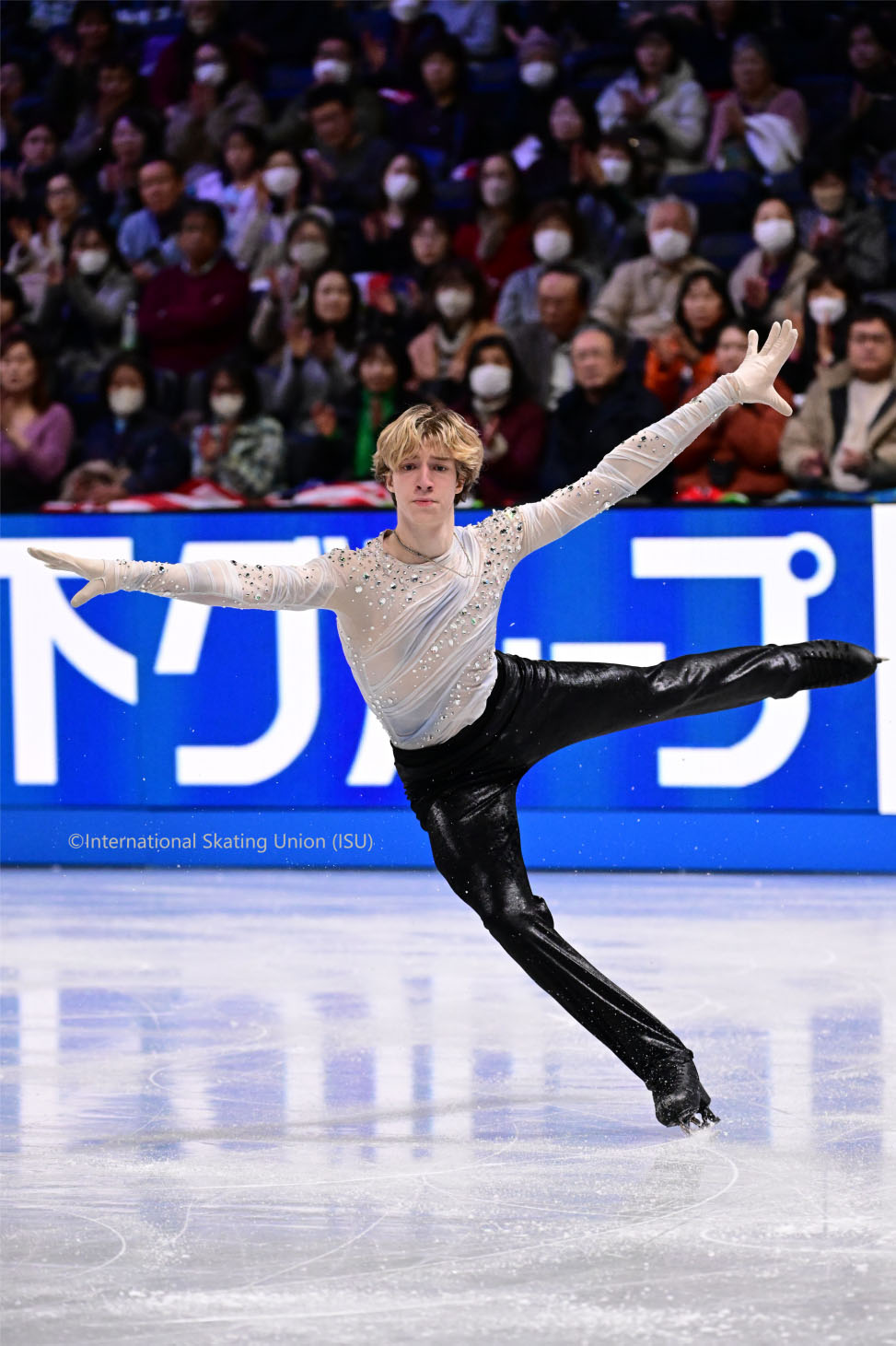
Senior Division: Innovation Beyond the Peak
The intensity of the competition reached an even higher level as the senior division took center stage. Confronted with the dual demands of extreme technical difficulty and refined artistic execution, the skaters delivered performances that pushed the sport forward both athletically and creatively. The newly crowned World Champion, Alysa Liu, captured gold while openly discussing her plans to challenge even more ambitious elements ahead of the Winter Olympics. Meanwhile, the self-styled ”God of the Quad,” Ilia Malinin once again asserted his absolute dominance, rewriting the record books and fundamentally redefining what is possible in men’s skating.
Senior Women: Dancing Beyond the Podium
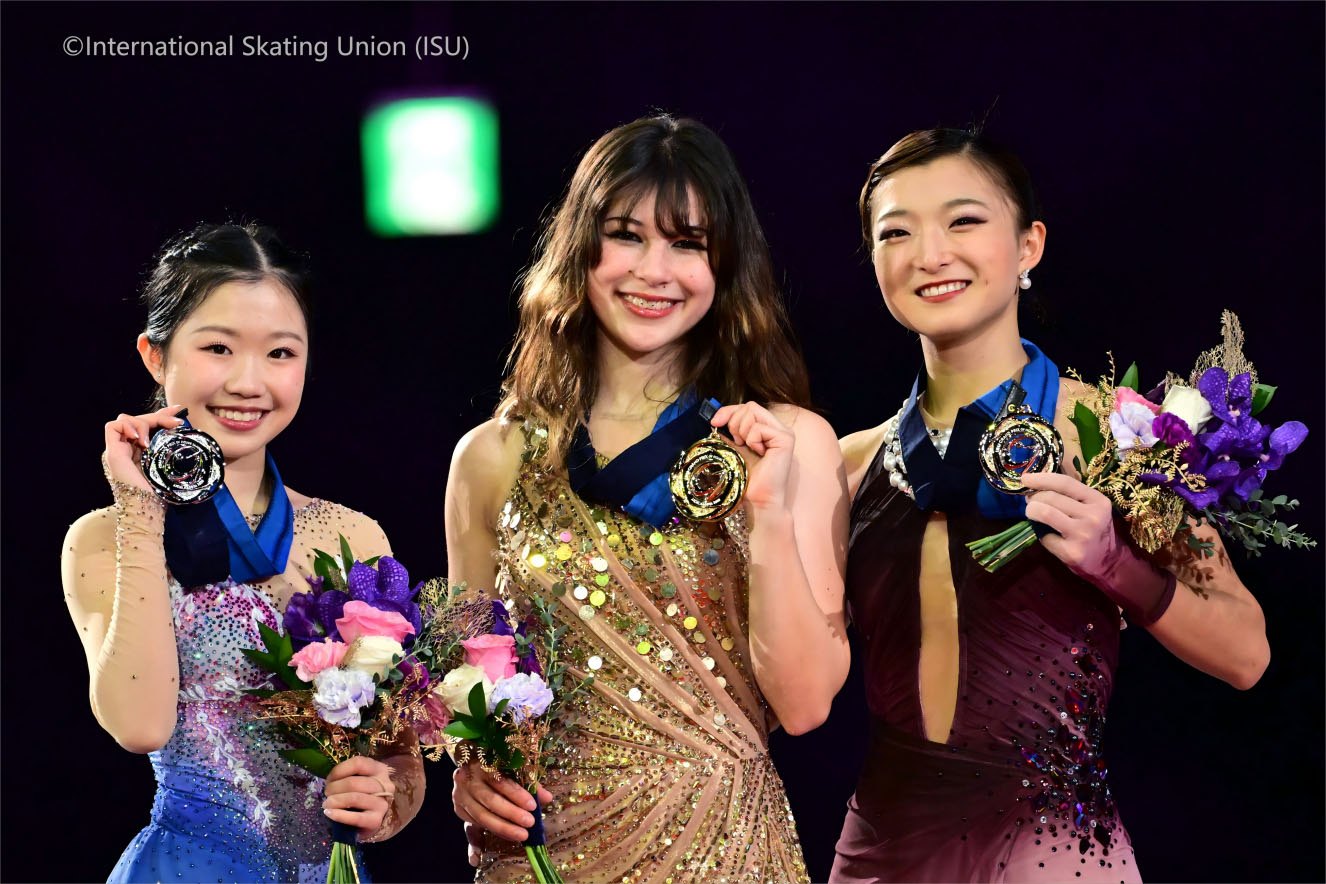
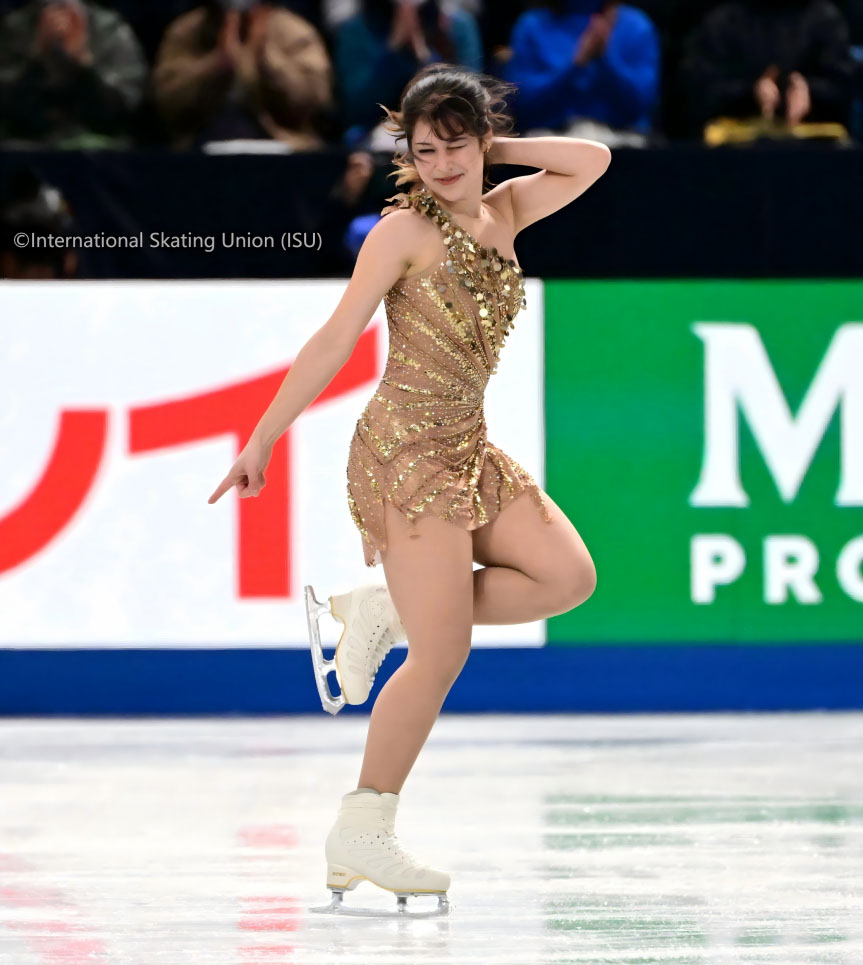
In the senior women’s event, Alysa Liu (USA) rebounded from a second-place short program to clinch the gold with a total score of 222.49. Her performance was more than a competition; it was a celebration. “I want to see you standing and dancing,” was the vibrant message she conveyed to her fans on the big screen. Opening to the upbeat MacArthur Park Suite, Liu immediately took command of the rink with a blend of technical precision and infectious joy. Her body language exuded freedom and relaxation, turning the intense competition into a joyous performance, as though it were a Christmas park show. After her performance, she playfully blew a kiss to the camera, sharing her joy with the audience.
Regarding her future technical goals to challenge the triple Axel (3A), Liu excitedly stated: “I don’t do things just to win. I love risky things. I like the triple axel itself, and just imagining what my program would be like if I included it excites me. I want to satisfy my own curiosity, and I also want to experience the feeling of landing a triple axel in a competition with a big audience. I want to show that kind of performance. Of course, I don’t know if it will go well, but I think that’s what makes a perfect show.”
Japan’s Ami Nakai, newly promoted to the senior ranks, demonstrated remarkable resilience. After a jump error in the short program, she roared back in the free skate, landing a 3A and five triples to secure silver with 220.89 points. This successful transition underscores her maturing artistry. Following her landmark victory over Kaori Sakamoto at the Grand Prix de France, Nakai has proven she is far more than a 3A specialist; her superior balance, varied skating speeds, and heightened expressiveness have firmly established her presence on the global stage.
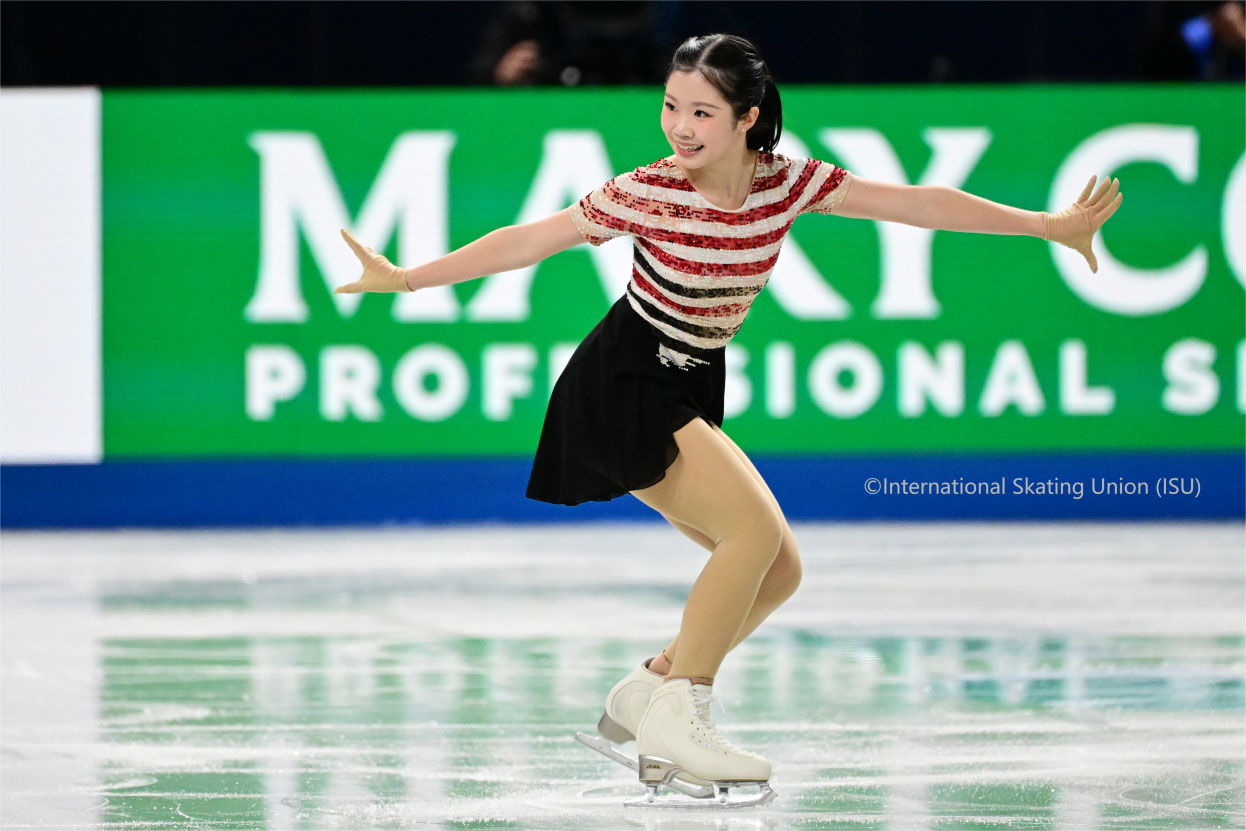
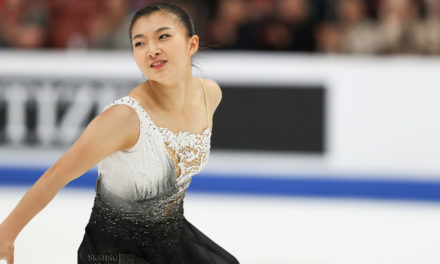
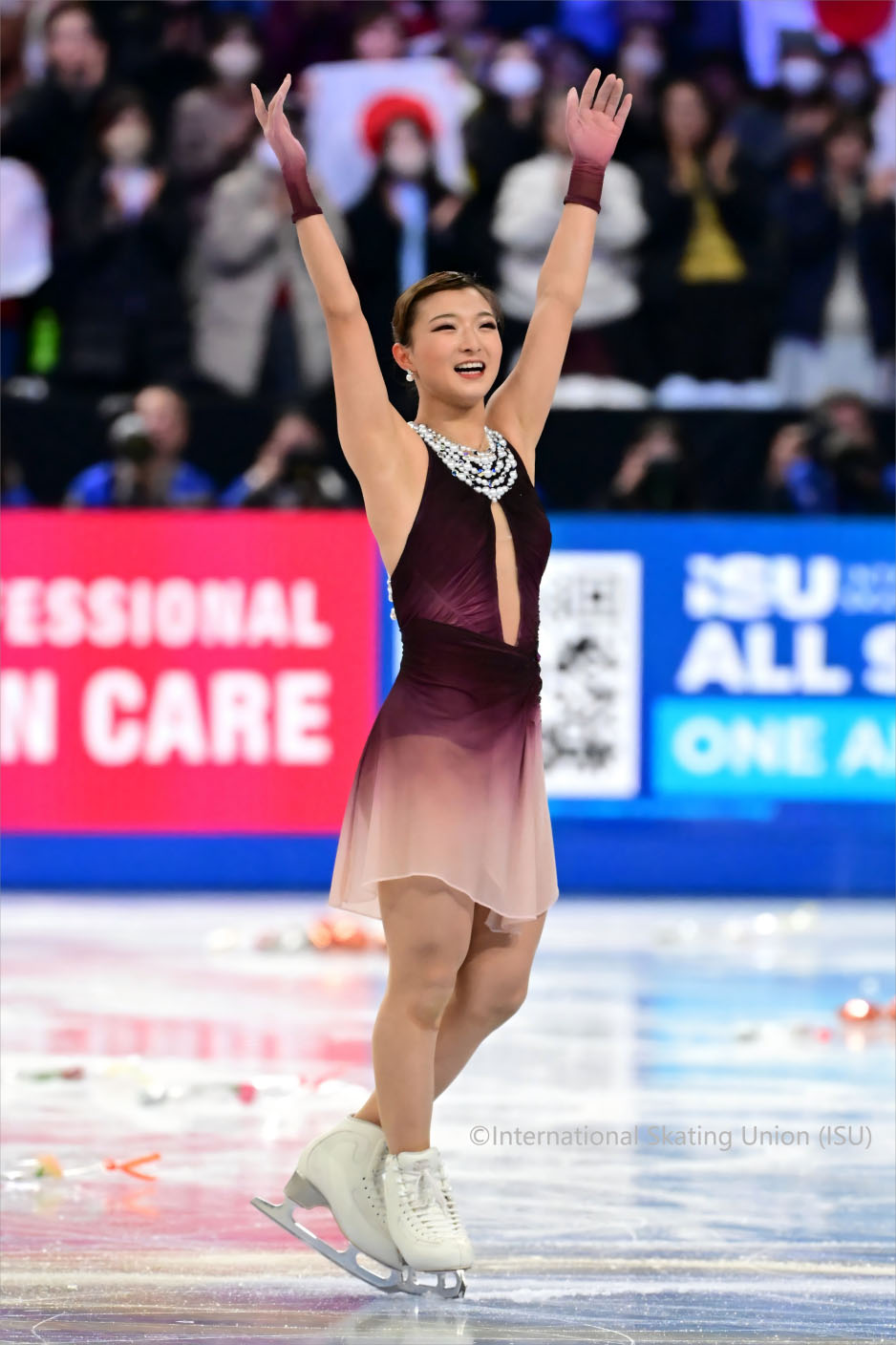
Three-time World Champion and a superstar in Japanese skating, Kaori Sakamoto refused to be discouraged by a disappointing fifth-place in the short program. She entered the free skate with a spirit of “revenge.” Delivering a near-perfect performance—marred only by a minor flaw on a three-jump combination in the second half—to earn 149.40 points in the segment. With a total of 218.80, she secured the bronze, a testament to her legendary mental fortitude.
Sakamoto, who has announced her retirement at the end of this season, admitted: “I knew I shouldn’t give up. I wasn’t able to perform at my best in either the short or the free, but it’s good to have reached the podium. I cried so hard at the Final that my tears have run dry.” She reaffirmed her determination: ”I hope to use this competition to erase my regrets and give everyone a performance that can be called the peak of Sakamoto’s career.”
Senior Men: Ilia Malinin’s Path to the Throne
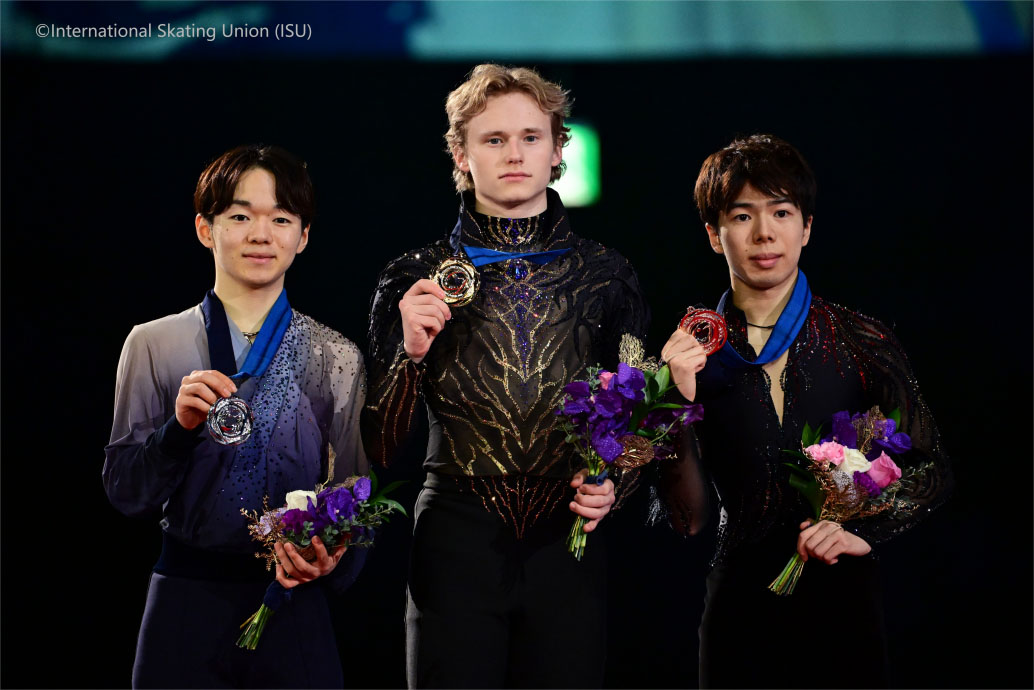
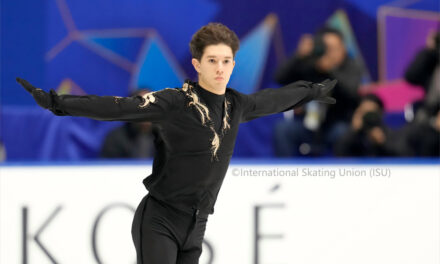
In the Men’s Singles competition, Ilia Malinin (USA) once again displayed unrivaled technical prowess to defend his title. In a historic free skate, he completed seven quadruple jumps across six varieties, shattering world records and living up to his moniker as the “God of the Quad.” With a staggering total of 332.29 points, Malinin surged from third place in the short program to secure the overall victory. His free skate score of 238.24 was nearly 10 points higher than his previous record set earlier this season.
Malinin’s choreography remains a bastion of innovation. Breaking away from classical traditions, he opted for a youthful, personalized music style, even incorporating his own voice into the musical arrangement, creating a choreography unique and unpredictable. On the day of the competition, as every element clicked into place, ten thousand spectators rose in a thunderous standing ovation. “Being able to land all of those seven quads was definitely a dream of mine since the last few years, and it really gives me hope now for the future.” Malinin said. “I thought about trying to water down to play it safe, but then I remembered why I came to the Grand Prix Final. For me, it is a place for me to try new things, new elements and new layouts to give myself an understanding of what is possible, especially for this year, for the Olympics,” Malinin firmly stated.
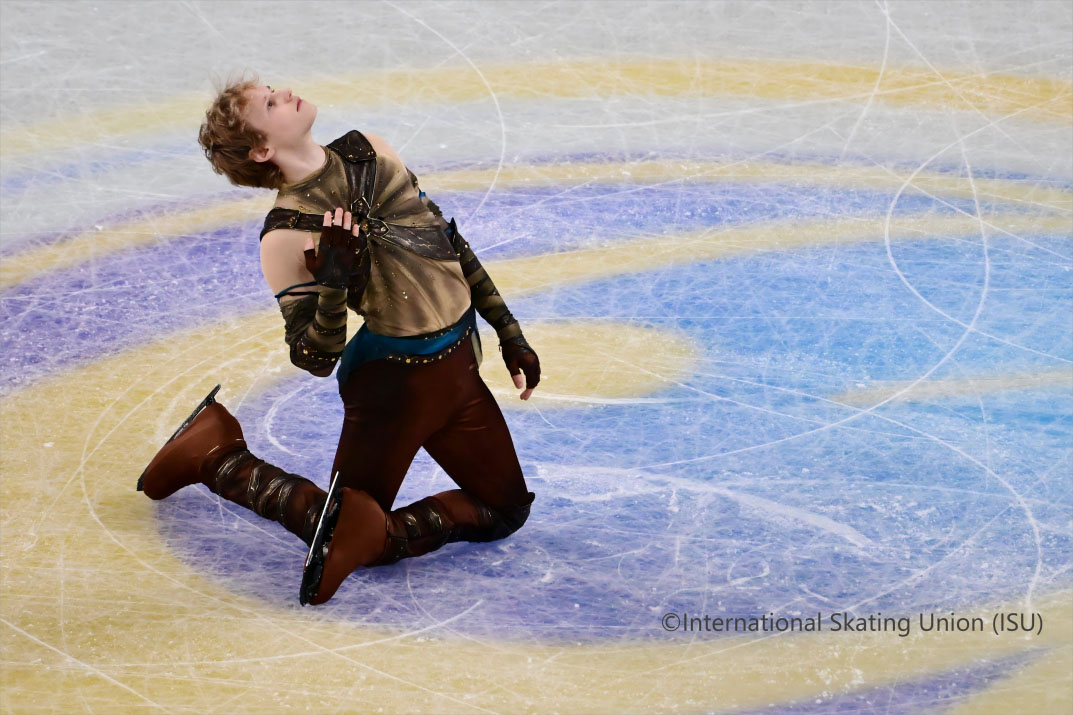
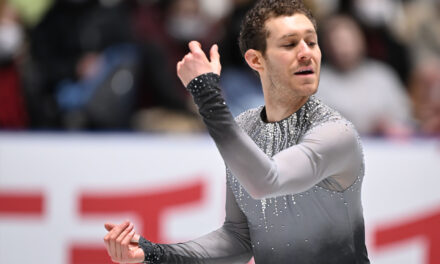
Japan’s Yuma Kagiyama, the leader after the short program with a high score of 108.77, delivered a masterclass in artistry through his “Turandot” program composed by the Grammy-winning Christopher Tin. Despite the considerable pressure following the stellar performances of Malinin and Shun Sato, being the last to skate in the free program, Kagiyama’s skating remained exquisitely expressive. Although two jump errors in the second half prevented a personal best, his performance earned high praise from the audience for its emotional depth. He secured silver with 302.41 points.
Afterward, Kagiyama admitted his disappointment over the missed opportunity and revealed that whether he will challenge the higher-difficulty quadruple flip (4F) remains under consideration. In early-season interviews, he mentioned that the choice of this piece was deeply inspired by Olympic champion Shizuka Arakawa: “Challenging for the gold” and the ”power to overcome difficulties”—he hopes to convey such spirit through his performance, while giving new life to the classic Turandot.”
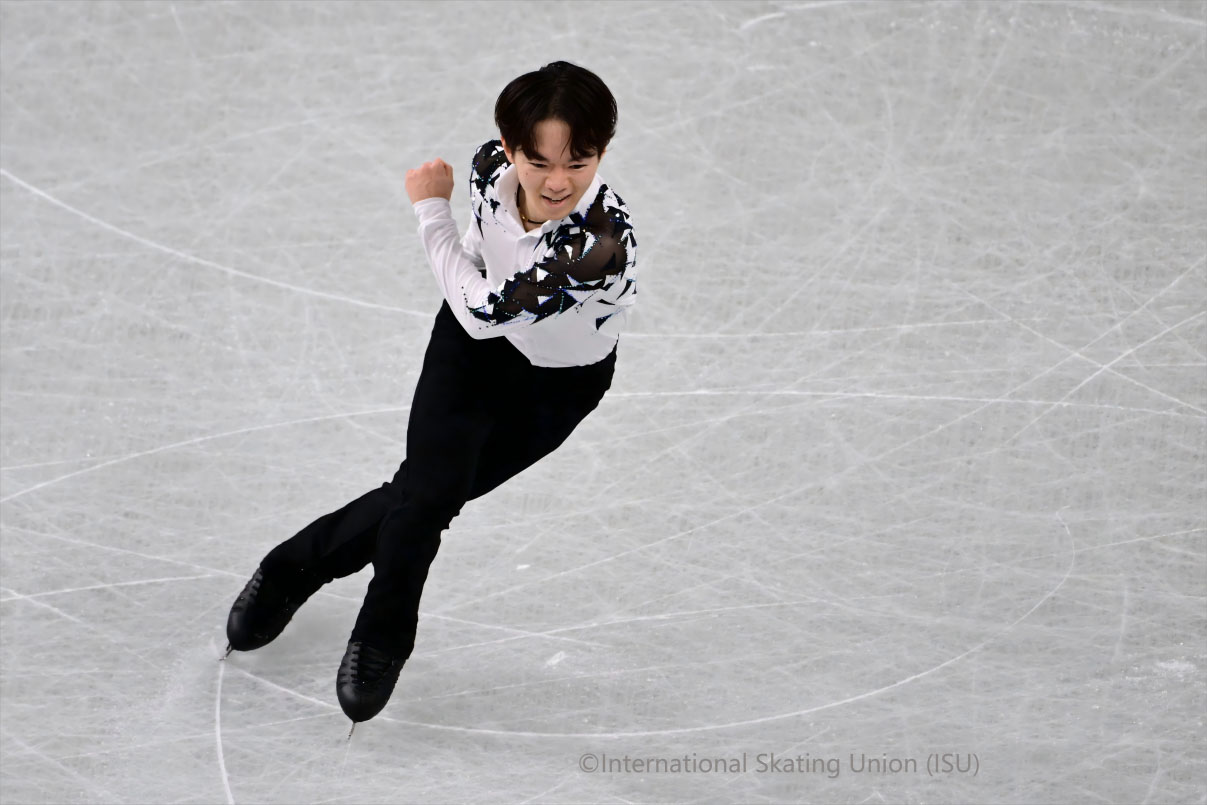
Immediately following Malinin’s record-breaking feat, Shun Sato overcame the exceptionally intense atmosphere of the arena to let his “Firebird” soar. Successfully landing three quadruples, including a quadruple Lutz (4Lz), he set a personal best in the free skate (194.02) and a personal best total (292.08) to take the bronze. Despite a season-long right ankle injury, Sato’s persistence shone through with his unlimited potential. “To be honest, I was more nervous than when I participated in the World Championships; I don’t think I’ll ever be more nervous than this. I will use this Grand Prix Final experience to stay calm in future competitions. Even if I’m nervous, I will try to maintain a positive mindset and face it as best as I can.” By harnessing his anxiety as a source of strength, Sato has firmly established himself within the world’s elites.
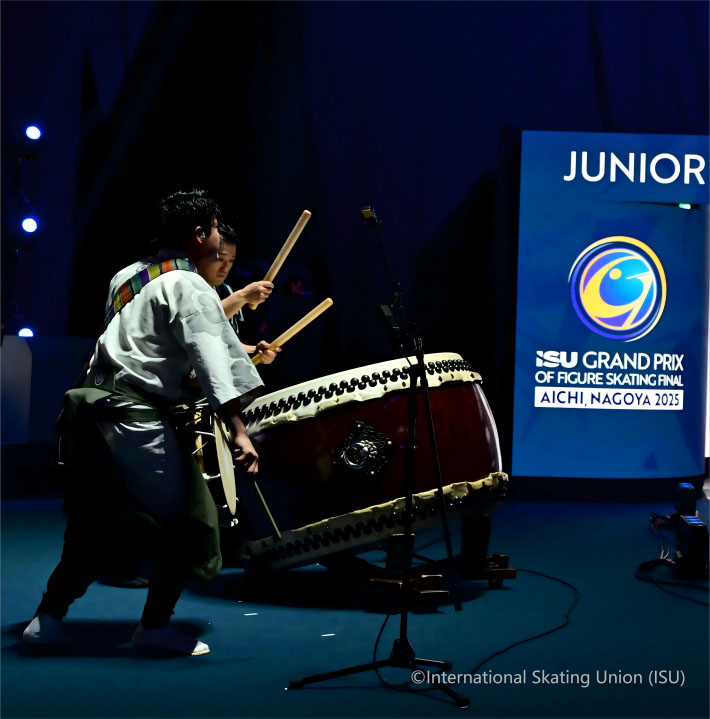
The drumbeats of Nagoya pulsate with a fresh new spirit
The host city of the 2025 ISU Grand Prix Final (GPF), Nagoya, is not only the heart of Japan’s Sengoku (Warring States) history but also a cradle for contemporary Japanese figure skaters. In recent years, with the popularity of the figure skating anime Medalist, Nagoya has become a holy land for fans. Walking through the city these days, promotional posters for the GPF are visible everywhere, juxtaposed with historical sites to present a unique cultural landscape.
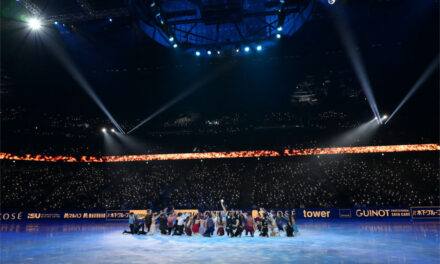
The arena’s layout also incorporated strong Sengoku period elements. The large drums sounded by the athletes before their entrance symbolized the war drums Nobunaga Oda used to pray for victory before heading into battle, boosting the athletes' morale. The medal design cleverly adopted the shape of the Oda family crest, the “five-petaled quince flower,” masterfully blending Japanese traditional culture with modern figure skating to symbolize the continuation of history and the exploration of the future.
Today, these young champions decide to take the path less traveled and live as their most authentic selves. Returning to competition is no longer a quest for medals for Alysa Liu, but a stage to express her devotion to the joy of skating. By prioritizing mental well-being and skating from the soul, she has found a fearlessness that radiates through her performances. Mirroring the competitive career of gymnastics superstar Simone Biles, Liu represents a spiritual rebirth in sports—a fresh start that leads her back to the very pinnacle of excellence.
Ilia Malinin, meanwhile, is undergoing a transformation from a “teen prodigy” to a “dominating force in skating.” Malinin is not just a technical innovator but a pioneer of figure skating. He hopes to introduce the sport to more young people who have not yet encountered it—especially those who love hip-hop and rock music—letting them see the “cool and charm” of figure skating. With the success of elite athletes, the hosting of major competitions, and the dazzling performances of star skaters, the “trickle-down effect” is gradually fermenting, promising to attract a new generation of young audiences and potentially bringing the sport back to its golden age in the 1990s and early 2000s.
The thunderous sound of the war drums was not merely to pray for a title; it conveyed the courage and will of the athletes, passing this power through sound to every spectator cheering for them. All the heart-pounding records set during this event will echo along with the drumbeats resonating through the arena, crossing time and space to reach Milan on the other side of the globe—the glory stage of the 2026 Winter Olympics—opening a chapter belonging to new dreams.
(Written by Tien-yun Chang, photographer: ISU)

近期评论
——“花样滑冰是艺术与体育最好的结合”
——“花样滑冰是艺术与体育最好的结合”